This page may contain affiliate links. If you make a purchase through one of these links, we may earn a commission at no extra cost to you.
Before we begin: if you just want our quick answer as to which sous vide immersion circulator is the best, we’ve picked the Anova Culinary Sous Vide Precision Cooker as our #1 option for home use.
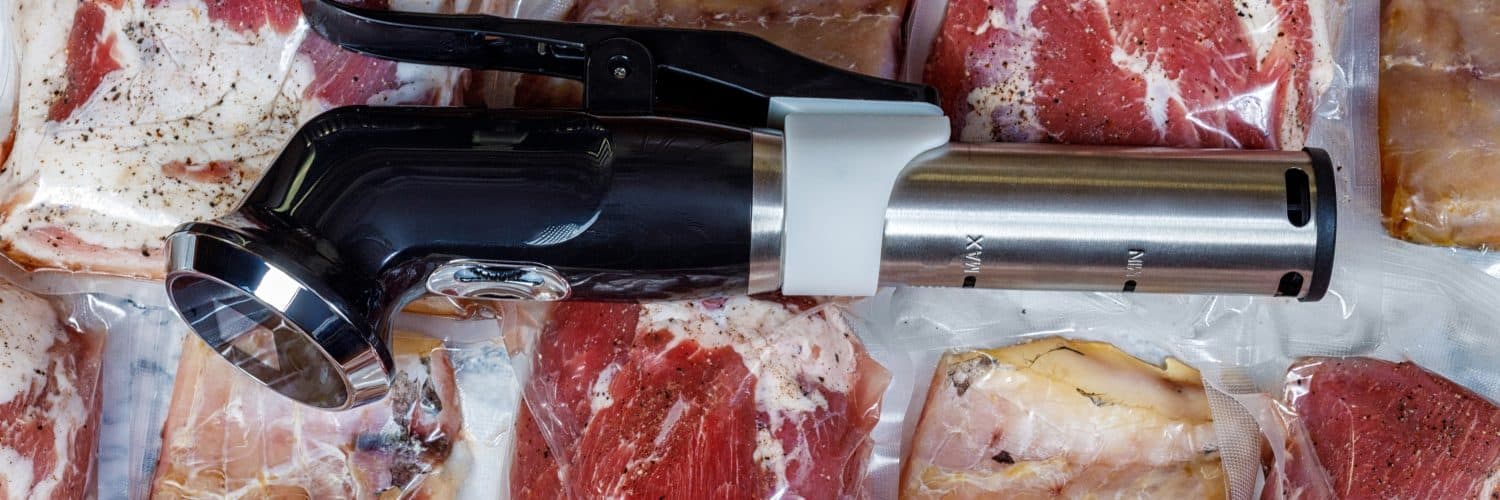
Once you’ve committed to taking the plunge into sous vide cooking, your next task is to figure out whether you want an immersion circulator or an all-in-one sous vide cooker. For most home users, we believe an immersion circulator is a better choice; it’s smaller, easier to store, and works with containers you probably already have.
But there are so many sous vide circulators on the market these days that it’s hard to know where to even begin with the research. Are they all as good as they sound? Is there a reason some are triple (or more) the price of others? And what does it mean to be IPX-7 rated, anyway?!
Read on for our top immersion circulator reviews. You’ll learn about some great machines for both casual or serious home users as well as professionals. And you’ll learn more about our #1 pick, the Anova Culinary Sous Vide Precision Cooker, which we love for its brilliant balance between great function and a reasonable price.


Table of Contents
The Top 8 Immersion Circulators
#1. Anova Culinary Sous Vide Precision Cooker
Best for: An Excellent Device at a Reasonable Price
Falling somewhere between the Nano and the Pro in terms of functionality, the Anova Culinary Sous Vide Precision Cooker is a great choice for the home cook who wants the perfect balance of quality and price. With an adjustable and removable clamp, WiFi capability, and a cook time of up to 5,000 hours, we think that you’ll find this option has everything you need for excellent home sous vide cooking.
As with several of Anova’s products, the app can sometimes be glitchy and the WiFi connection can be problematic. You may not encounter these problems, and we typically find that it’s more convenient to simply control the device manually anyway. However, if it’s important to you to have a high-tech device, just keep in mind that you may end up frustrated. With that said, in our own tests, we’ve found the app to be reliable and functional.
Overall, this device deftly balances the line between an accessible price tag and an excellent machine. It isn’t exactly the best at anything; there are more powerful options, and others that come at lower prices. It is, however, one of the best at providing value for the money. This is a great contender for any home cook who wants a great, high-quality sous vide machine without splurging on one of the top-tier devices.
- Maximum capacity: 8.5 gallons
- WiFi or Bluetooth enabled: Yes
- WiFi required: No
- Adjustable flow: No
#2. PolyScience CREATIVE Series Sous Vide Immersion Circulator

Best for: Home Chefs Looking for a Truly Excellent Machine
With their background in industrial temperature control systems, it’s no wonder that most of PolyScience’s sous vide machine offerings look like something out of a laboratory. But with the CREATIVE series, the company proves that it can also make devices ideal for a passionate home chef whose budget might not extend to one of the truly professional options.
The CREATIVE’s aesthetic is unique; it’s appropriate for a home kitchen, yet still charmingly maintains some of the look of a scientific device rather than fully adopting the sleek, modern profile of most other home sous vide machines on the market now. And it doesn’t compromise on its scientific integrity either. Just like PolyScience’s industrial sous vide devices, it maintains temperature stability to an incredible 1/10th of a degree Fahrenheit.
With a maximum capacity of just over 5 gallons, this option doesn’t allow for cooking in the larger quantities of PolyScience’s other sous vide machines. However, it’s perfectly appropriate for home use; it’s rare for a home chef to need a larger capacity than this. (PolyScience estimates that this capacity will serve up to 12 people.) Note that this product is specifically designed for home cooks anyway, and not intended for commercial or restaurant use.
With its incredible precision, simple controls, durable build, and very reasonable price given its great features, this is one of our top picks for the home chef. It may not look as fancy or flashy as other options, but it consistently, reliably gets the job done. And sous vide is all about consistency and reliability, after all!
- Maximum capacity: 5.3 gallons
- WiFi or Bluetooth enabled: No
- WiFi required: No
- Adjustable flow: No
#3. Inkbird WIFI Sous Vide Cooker
Best for: The Sous-Vide Curious on a Budget
Incredible food shouldn’t just be for the wealthy, and sous vide in particular is a way for the average home cook to create restaurant-worthy meals every time. But with so many sous vide machines being so pricey, is the technique really accessible as it claims to be?
Thanks to budget options like the Inkbird immersion cooker, the answer is now a resounding yes. Unlike some other brands on our top picks list, Inkbird doesn’t focus on sous vide devices (or even cooking appliances). Instead, it’s a home automation company that also offers various smart home devices.
This lack of specialization and incredibly low price tag definitely haven’t hurt the final product, though! Its 1000W build actually exceeds some other, more expensive choices on our list, while its 1°F accuracy isn’t as precise as others, but definitely still within reason for all but the very most precise sous vide applications. And while it’s WiFi enabled (as you’d expect from a device made by a smart home company), it luckily doesn’t require WiFi. You can also set up the device manually.
Like many sous vide devices, the main flaw isn’t with the machine itself, but rather with the app. It can be glitchy and finicky, especially when you’re first setting it up. Once you have it working, though, the app is intuitive and easy to use.
- Maximum capacity: 4 gallons
- WiFi or Bluetooth enabled: Yes
- WiFi required: No
- Adjustable flow: No
#4. Instant Pot® Accu Slim Sous Vide Immersion Circulator
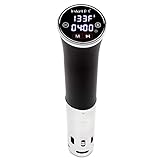
Best for: A Quiet, Lightweight Device for the Entry-Level User
Another fantastic budget option, the Instant Accu Slim Sous Vide proves that you really can get a great device from a well-known company for a budget price. You’ve heard of Instant Pot for their pressure cookers, but now you can turn to this company for an immersion circulator as well. And best of all, it’s one of the lowest-priced options we’ve found.
While this device is specifically designed for use with the Instant Pot (you just stick it into the Instant Pot’s pot), it can also work with a container of your choice. To be honest, if you want this device and an Instant Pot, we’d recommend just getting the Instant Pot Duo Evo Plus Pressure Cooker 9 in 1. The Evo Plus includes sous vide functionality, which means you won’t need to purchase a separate device. And with the Evo Plus also being such a budget-friendly option, it’s hard to justify buying the sous vide immersion circulator separately.
You can’t expect perfection from a product at this price, and you’re certainly not getting it. This circulator is designed for a 6- or 8-quart system, meaning its capacity is easily the lowest on our list. If you just want to sous vide for a few people, this shouldn’t be a problem. If you have a large family or frequently have big dinner parties, though, you should probably look for an option designed for a more generous capacity.
This device also doesn’t have WiFi or Bluetooth capability, so look elsewhere if that’s a dealbreaker for you. (We prefer manual operation anyway, but your priorities might be different.)
Finally, our biggest issue is with the timer function. One of the delights of sous vide cooking is that you generally don’t need to be concerned about exactly how long you’re cooking for, and the margin of error can often be measured in hours. However, the Accu Slim’s timer completely defeats this flexibility. Instead of alerting you when the food is done and then continuing to hold it at the intended temperature, it shuts off when the timer runs out.
This means that if you’re not paying attention or don’t hear the timer, your food will be sitting in an increasingly tepid water bath indefinitely, possibly even in the food temperature danger zone. As a result, we recommend either not using the timer at all, or setting it for the maximum possible time you want to cook your food instead of the specific intended time.
With all of that said, if you already have (or don’t want) an Instant Pot and just want a great immersion circulator for an incredibly reasonable price (and you’re willing to keep a close eye on the cook time), we recommend this one.
- Maximum capacity: 2 gallons
- WiFi or Bluetooth enabled: No
- WiFi required: No
- Adjustable flow: No
#5. PolyScience CLASSIC Series Sous Vide Commercial Immersion Circulator

Best for: Commercial Chefs
Before we go into depth about this particular device, it’s important to understand a little about the history of PolyScience as a company. Despite now having a culinary branch, the company’s main role is as a provider and innovator of “liquid temperature control solutions.” Most of their products are designed for laboratories, the medical industry, and other professions far removed from cooking.
With this background, it makes sense that PolyScience could easily rebrand a scientific device for culinary use, and create what they describe as “the original sous vide immersion circulator for culinary use.” And that’s exactly what you get with this CLASSIC-series device.
Even visually, it’s easy to tell right away that this device’s roots lean toward industrial or laboratory uses instead of the modern kitchen. Lacking the sleek, elegant design of many contemporary sous vide devices, it instead looks like something you might find in a chemistry lab instead of a kitchen.
While this device is at the top in terms of pricing and is honestly overkill for the average home kitchen, there are several things we absolutely love about it. And given the company’s background, it makes sense that the machine would operate this way!
First, the CLASSIC is breathtakingly precise, with temperature variations of under a tenth of a degree Fahrenheit. With sous vide cooking, precise temperature control is important, but this level of precision blows us away. Second, it’s incredibly well-built and durable; you can expect this machine to last even with extremely heavy use. And finally, it’s simple and straightforward to operate manually, without the hassle of trying to get Bluetooth to work or your phone’s app to sync with your device.
- Maximum capacity: 8 gallons (120V) or 12 gallons (240V)
- WiFi or Bluetooth enabled: No
- WiFi required: No
- Adjustable flow: Yes
#6. PolyScience CHEF Series Sous Vide Commercial Immersion Circulator
Best for: Commercial Use, Advanced Home Chefs, or Culinary Students
Sometimes, simple is best. The PolyScience CHEF Series immersion circulator may not have all the bells and whistles of the newest devices, but in many ways, that’s a good thing. We’ve all struggled to get technology to work and to successfully sync “smart” devices with each other. But with this device, you don’t need to.
Instead, the controls are fully manual, and incredibly straightforward with just four buttons. For anyone who struggles with the constant changes of modern technology, this type of device is a welcome reprieve.
We love this machine for its durability, its generous capacity, the adjustable water flow, and especially the temperature control that’s precise all the way to 1/10th of a degree Fahrenheit. You may have heard people complain about their sous vide machines being even several degrees off, but this scientifically designed device is specifically created to precisely maintain temperature even with relatively large volumes of water. We’re impressed!
For most home cooks, this device would be overkill. If all you want to do is make a nice sous vide meal every couple weeks, you don’t need anything this high-end and professional. However, if you’re a true sous vide connoisseur or passionate enough about molecular gastronomy to need a device that controls water temperature with incredible precision, this may be the perfect choice for you.
It’s also a great option for chefs who want a durable, professional device that’s quick and easy to get going. Because let’s be honest—who has time in a professional kitchen to mess around with a Bluetooth or WiFi connection that decided to be moody that day? When every second counts, a straightforward, manually controlled device is the way to go.
- Maximum capacity: 8 gallons
- WiFi or Bluetooth enabled: No
- WiFi required: No
- Adjustable flow: Yes
#7. Anova Culinary Sous Vide Precision Cooker Nano

Best for: A Low-Commitment Entry to the Anova Lineup for the Sous-Vide Curious
While PolyScience is renowned among chefs for its commercial sous vide offerings, Anova is perhaps the best-known sous vide brand for home enthusiasts. And for good reason! Their devices are sleek and classy, and strike a great balance between innovation and reliability. They allow you to use a Bluetooth-connected app to control your machine, but you can just as easily do it manually. We love this versatility that allows home chefs to go either low-tech or high-tech as they prefer.
Most of their devices, though, are a bit on the expensive side for someone who doesn’t yet know whether they’ll love this cooking style. (Hint: you will.) With the Anova Nano, you’re getting the benefits of the Anova lineup without the price tag to match.
We also love the sleek, slender profile of this device. It feels almost like an immersion blender in your hand, and fits easily in drawers. (In fact, one of our writers here at Cuisine Technology actually once lost hers in the back of a drawer for several days—which is definitely not something you could do with larger sous vide machines!)
While we’ve heard some minor complaints about the app, it has worked well and reliably in our tests. With that said, it’s great that it’s not necessary to control this device with the app, and typically find ourselves using the manual controls instead. If you’re looking for a slender, relatively low-cost device from a company known for its excellent home sous vide machines, look no further.
- Maximum capacity: 5 gallons
- WiFi or Bluetooth enabled: Yes
- WiFi required: No
- Adjustable flow: No
#8. Anova Culinary Sous Vide Precision Cooker Pro
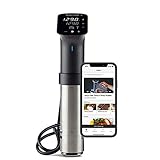
Best for: Cooking Huge Quantities at Home or Professionally
The Anova Precision Cooker Pro is almost absurdly powerful. Its numbers put it in a league of its own among home sous vide devices, leaps and bounds beyond what others are capable of. If you want to heat 26 gallons of water for 10,000 straight hours (that’s well over a year!), this is the clear winner.
With that said, how often are you really preparing sous vide meals for 60 people a year in advance? While we’re impressed by the mind-boggling numbers, they’re largely irrelevant for typical home users. (And we’re pretty confident that any food that you sous vide for a year is going to be absolutely inedible anyway.)
But don’t write off this machine just for being too good! It has lots of great features that aren’t overkill. For example, its 1200 watts lead to quick heating, so you don’t have to wait as long for your water bath to come up to temperature. It’s also drop-tested to ensure durability, and IPX-7 rated, which means that it’s capable of being fully submerged in up to a few feet of water for 30 minutes or less. While we don’t suggest trying to drown your immersion circulator, this waterproof construction is appreciated given the likelihood of the occasional accidental splash.
- Maximum capacity: 26 gallons (covered)
- WiFi or Bluetooth enabled: Yes
- WiFi required: No
- Adjustable flow: No
BONUS: The One Popular Sous Vide Unit We Would NEVER Recommend
Breville Joule Sous Vide (NOT an affiliate link; we do not recommend this product and only include a link at all so you can see which one to avoid)
Best for: Users Who Prefer Connectivity Over Stability, and Have Flawlessly Perfect Internet Connections at All Times…
To be honest, we’re baffled that this device is so extremely popular. Sure, it has a sleek, futuristic look that seems like it came out of 2090. And yes, its slender profile means it takes up minimal space and will slip into most drawers for easy storage.
But none of that makes up for its glaring flaw. Our major issue is that this machine doesn’t work without Bluetooth or WiFi. If you’re lucky enough to have a fully stable internet connection that never goes out, we’re thrilled for you, and can wholeheartedly recommend this device. In our experience, though, completely reliable WiFi is rare, and the occasional glitch or brief interruption is common.
And even if your home WiFi is perfect, these devices occasionally have their own issues with connecting.
Our team here at Cuisine Technology unanimously agrees that particularly in sous vide cooking, reliability and precision are the priority over innovation and connectivity. We would rather have our food cooked by a manually controlled device that perfectly maintains its temperature rather than one that’s always at the mercy of your WiFi status.
If the Joule had even an option to operate it manually without WiFi, we would have included it as a recommendation (rather than something to steer clear of). However, until we completely trust that WiFi is generally flawless without glitches, we can’t in good conscience suggest buying this device.
If you’re looking for something in the same general price range, we’d suggest the PolyScience CREATIVE Series Sous Vide Immersion Circulator. It leans strongly in the opposite direction, focusing fully on reliability and precision over sleek looks and connectivity. While that one isn’t WiFi or Bluetooth enabled at all, we think you’ll find that the simple manual controls actually do the job better.
- Maximum capacity: 10 gallons
- WiFi or Bluetooth enabled: Yes
- WiFi required: Yes, yikes!
- Adjustable flow: No
What Is an Immersion Circulator? And Why You Need One
Now that you’ve decided to sous vide at home, your next step is to decide which type of sous vide device you want. All-in-one sous vide cookers, which are standalone devices similar to a slow cooker, are arguably more convenient because you don’t need to supply your own water bath container. Certain models also come with other features and can work as a slow cooker, rice cooker, steamer, and more.
Immersion circulators, however, have a pretty compelling list of advantages despite being used for just one purpose. They’re much smaller and easier to store, bearing more similarity to a handheld immersion blender than a full-sized rice cooker. They can be used with any appropriate container, so you aren’t limited to whatever comes with your cooker. They all circulate water (hence the name), which is a great help with sous vide cooking and which many all-in-one sous vide cookers don’t do. And finally, they’re typically much more budget-friendly.
An immersion circulator simply screws or clamps onto the container of your choice, which you then fill with water to between the designated lines on the device. You program the device to the temperature you want, either manually or via an app (with some devices). You then allow the water bath to come up to your chosen temperature and cook your food until it’s done.
The Benefits of Using a Sous Vide Circulator
For the typical home cook, we generally recommend an immersion circulator over an all-in-one sous vide cooker. We love these relatively small devices for several reasons:
- They’re compact and capable of easy storage in a drawer or on a shelf, and don’t require significant counter space
- They all circulate water, which helps your sous vide food cook more evenly and consistently (and is something that a lot of the all-in-one machines don’t offer)
- They work with just about any appropriately sized container that you already have in your house.
- Most of them are designed with home users in mind.
And the benefits of sous vide cooking in general are too extensive to cover in depth here, so we’ll just recap:
- Consistent, precise results (no more overcooked or undercooked food!)
- Flexibility in terms of timing, with often a several-hour window between the time you can first pull your food out and the time it starts to lose quality
- Set-and-forget style of cooking that allows you to focus on other things instead of being stuck in front of the stove
5 Things to Look For in a Good Immersion Circulator
1. Make sure the capacity is large enough for your intended use (but you don’t need to go overboard!).
2. Decide whether an adjustable flow rate is important to you. For most home cooks, it won’t be—but professional chefs and truly passionate home sous vide connoisseurs may appreciate the extra flexibility.
3. Some immersion circulators are fully manual, at least one requires that you use WiFi, and many offer an app but also allow manual control. We recommend avoiding devices that require WiFi, but you’ll have to decide whether you prefer the option of using an app or want manual control only.
4. How careful are you with your cooking devices? If you can avoid splashing the part of the circulator that’s supposed to stay dry, any option should work for you. However, if you know you tend to be a bit chaotic when you cook, we recommend the Anova Culinary Sous Vide Precision Cooker Pro for its IPX-7 rating, which means it’s more waterproof than most other options.
5. Choose a device that’s a good fit for how often you’ll realistically use it. If you only intend to sous vide occasionally, a budget device might last you quite a while since it will get relatively little use. If you’ll cook this way often, though, look into a higher quality, more durable machine.
Conclusion
A great sous vide immersion circulator will help you create incredible, restaurant-worthy meals with surprisingly little effort. You just set it and forget it, often for up to a few hours, while it maintains the perfect water bath temperature to gently cook your food to the exact doneness you prefer.
Because precision and durability are so important, but most people aren’t operating on unlimited kitchen appliance budgets, we recommend the Anova Culinary Sous Vide Precision Cooker for its perfect blend of affordability and function. However, depending on what your priorities are, you might prefer another option—so make sure you read through our list to help you find the device that’s right for you!